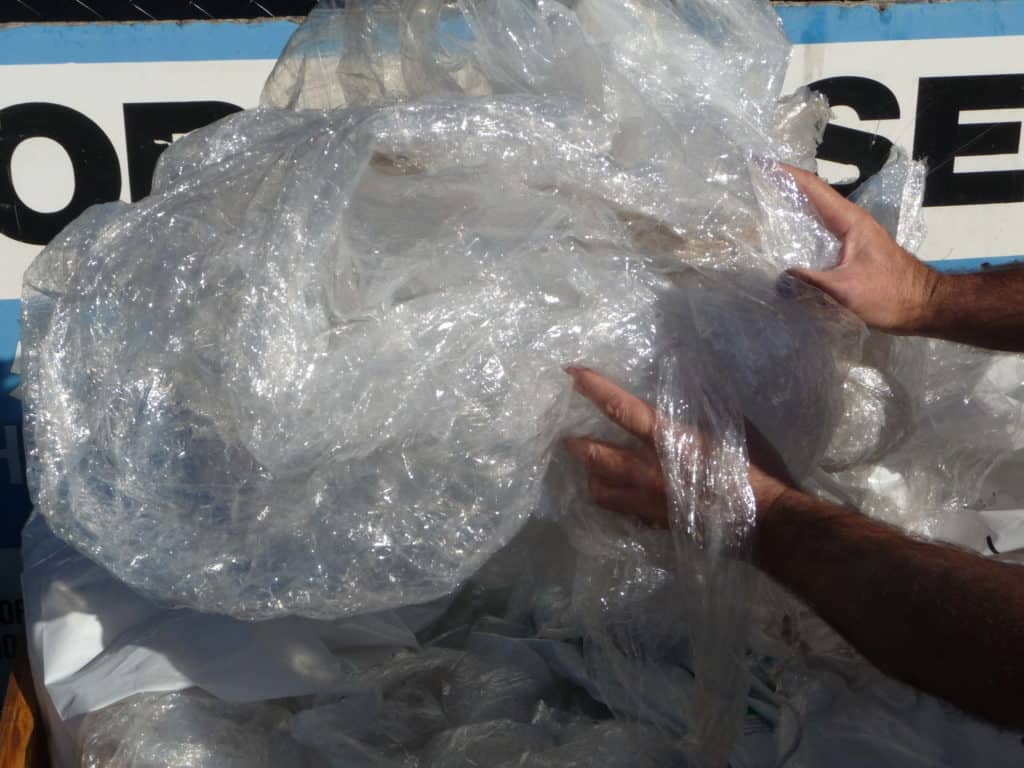
Stretch wrap is not a hard material to recycle. It is clean LLDPE coming off your own pallets, handled by your own people, in a space you control. On paper it is the easiest stream in the building.
It still ends up in the compactor at most plants, and the reason is almost never chemistry. Film users hit the same wall: they accumulate real volume over time but never enough at once to justify regular collection and transport, and most MRFs refuse film anyway because it wraps around their sorting equipment. A California program launched earlier this year specifically to solve the aggregation problem, pooling film across multiple sites until the quantity justified a haul.
Most plants do not need a regional program. They need density.
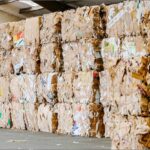
Loose film in a trailer is mostly air, which is why no hauler wants the stop and why the economics never pencil. Bale it and the same weekly film becomes something a reclaimer will schedule a pickup for. That is the entire shift. Not new technology, just compaction.
Work through it in this order
Capture at the source
Separate film at the receiving door where somebody unwraps the pallet, into a labeled cart. Do not plan on pulling it out of a dumpster later. Once it mixes, you lost it.
Keep it clean and dry
Product residue, wet film, and stretched-out tape are what get loads rejected. Dry storage matters more than most people expect.
Do not blend grades
Clear pallet wrap outsells colored or printed film. Mixing them to fill a bale faster costs you on the ticket.
Do the pounds per week math
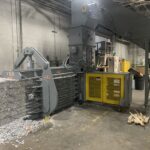
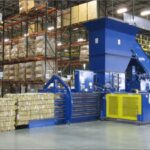
This number decides everything else. A few hundred pounds a week puts you in vertical baler territory. High volume across multiple docks starts to justify a horizontal, and the labor savings usually make that case faster than the material revenue does.
Plan the floor space
If your volume means you ship a load every six weeks, you store bales for six weeks. Decide where before you start making them.
What film actually buys you
Film will not make you rich. What it does is pull a stream out of your landfill number, cut compactor pulls, and give you something to point at when corporate asks about diversion.
Source: Resource Recycling, coverage of a California closed-loop stretch film program, April 2026.
If you are not sure whether your film volume justifies a vertical or horizontal baler, that is a five-minute conversation. [Talk to us about sizing the right baler for your volume.]