
Brewer Science, right here in Rolla, Missouri, just marked its eleventh straight year of Zero Waste to Landfill certification. That’s not a small feat.
What Counts as Zero Waste to Landfill
Programs like GreenCircle, UL 2799, and TRUE all work the same basic way. Your facility has to divert 90 to 100 percent of what it throws away from the landfill. An outside auditor checks the numbers. Companies chase this because customers and corporate parents are asking for it. It has also become a real line item on supplier scorecards.
Where the Diversion Rate Gets Made or Lost
Here’s what doesn’t get talked about enough: hitting that number almost never comes down to one big initiative. It comes down to what happens at the dumpster and the compactor, day after day.
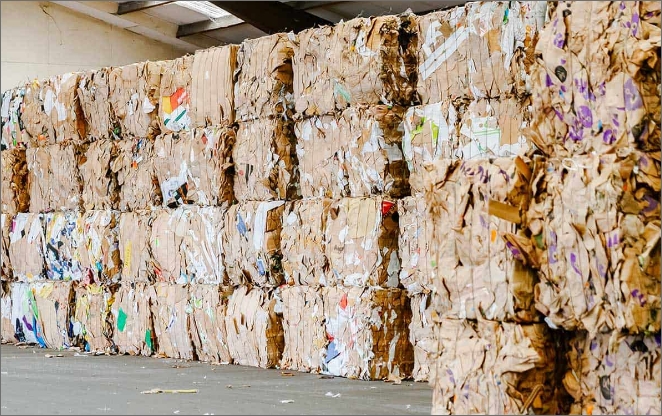
Most manufacturing and distribution facilities generate three or four material streams that could realistically be diverted. Think OCC and other cardboard, plastic film and stretch wrap, wood pallets, and scrap metal. Bale or separate that material properly, and it goes to a recycler instead of a landfill. Often it brings in revenue instead of costing you a hauling fee. Toss it into a compactor with general trash, and none of it counts toward diversion. You end up paying to bury something you could have sold.
The Fix Is Usually a Walk, Not a New Program
A lot of facilities leave points on the table without realizing it. A compactor makes trash disappear efficiently, and that’s exactly the problem. It’s easy to let cardboard and film ride along with everything else. Maybe there’s no baler nearby. Maybe the one you have is too small, or too far from where the material is actually generated. Every box and every pallet wrap that ends up compacted with garbage hits your diversion percentage. The right baler in the right spot would have caught it instead.
If your plant is working toward a zero waste to landfill target, start with a walk through your dock and back-of-house. See what’s actually landing in the compactor versus the baler. That’s usually where the easiest gains are sitting.
Source: Brewer Science, 2026 Impact Report, June 2026